
Early Years
Nursery and Kindergarten in Bangkok for Children Aged 2 to 5
A joyful beginning to a future-ready international education
The early years shape how children see themselves as learners. At EtonHouse International School Bangkok, our Nursery and Kindergarten programmes offer children aged 2 to 6 a warm, engaging environment where their ideas are heard, their questions are valued and their individual strengths are understood.
As Bangkok’s only school that officially represents the Reggio Emilia approach, we offer an authentic Reggio Emilia-inspired education grounded in a deep respect for children as capable, curious and full of potential. Through purposeful play, inquiry and meaningful relationships, children build strong foundations in communication, early literacy, mathematics, physical development and wellbeing.
Small class sizes allow educators to know each child deeply and respond to how they learn. Purpose-built studios, ateliers and learning spaces invite children to investigate ideas, express their thinking and develop increasing independence.
Every experience supports the qualities children will need for school and life, including confidence, creativity, adaptability and a love for lifelong learning.
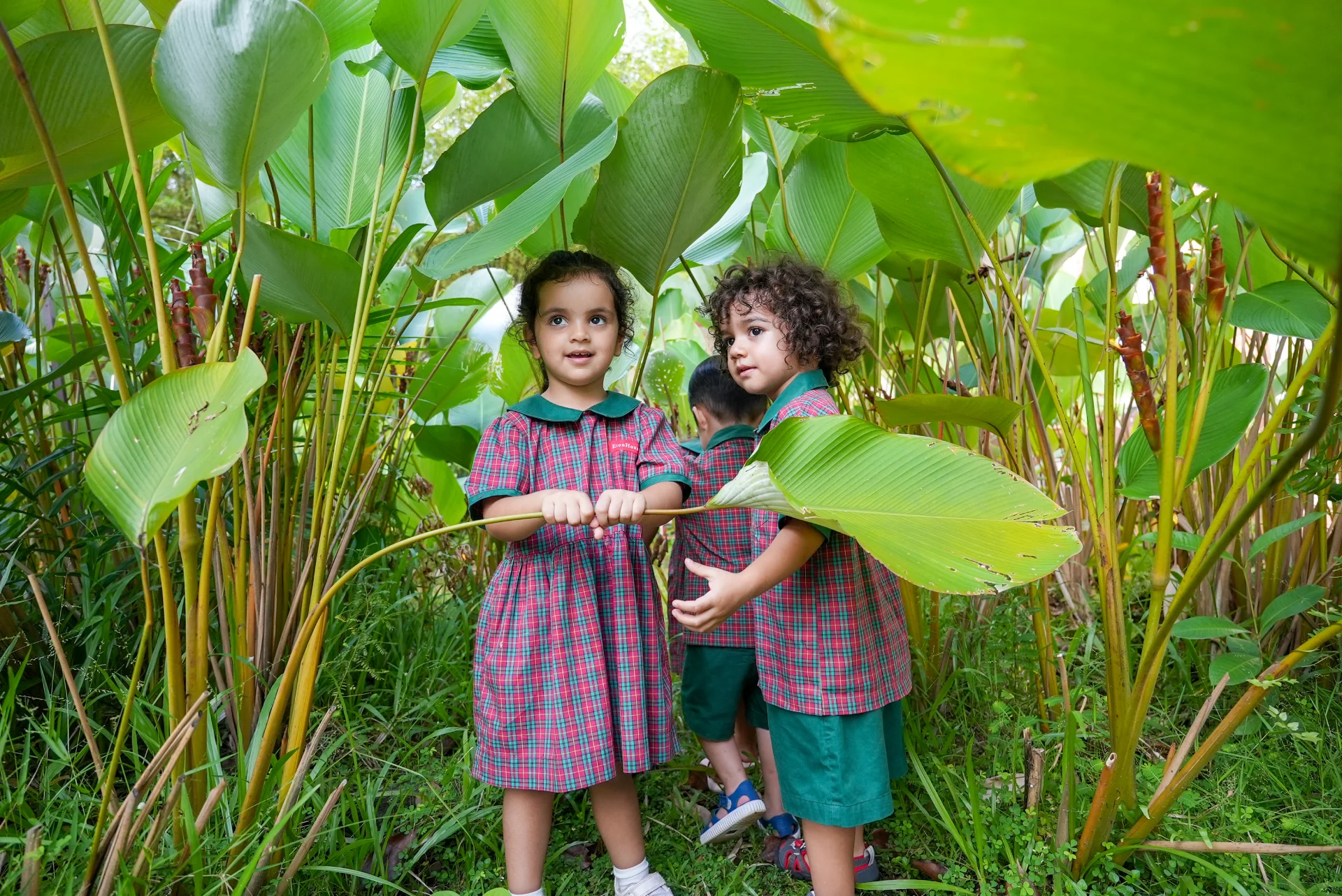
Capable, curious learners
Children take an active role in their learning. They ask questions, test ideas, make choices and reflect on their discoveries with the support of attentive educators.
A multilingual foundation
Children develop confidence in English, Thai and Mandarin within a culturally diverse international school environment. Opportunities to strengthen additional languages help children connect to other languages, cultures and identities.
The Inquire. Think. Learn. Curriculum
Every experience is guided by EtonHouse’s Inquire. Think. Learn. curriculum framework. Inspired by the Reggio Emilia approach to early childhood education, the framework supports each child’s development across six interconnected learning domains.

The Social Child
Children develop essential social and communication skills—listening, speaking, negotiating and building self-confidence—within a nurturing, collaborative, and diverse environment.

The Child as Communicator
Focusing on listening, speaking, reading and writing, children gain literacy and effective self-expression alongside comprehension and communication skills.

The Thinking Child
Through Mathematics, Science and Technology, children explore concepts, develop logic, problem-solving and critical thinking skills.

The Physical Child
Children learn about physical health, safety and nutrition while developing fine and gross motor skills.

Creative Expression and Enjoyment Through the Arts
Children engage with the arts through creating, performing or appreciating, fostering creativity, enjoyment and self-expression.

The Child as Agent of Change
Children cultivate environmental awareness, social responsibility and an understanding of how their actions can positively impact the world from an early age.
Core Philosophy: Culture and global awareness are integrated across all domains, reflecting EtonHouse’s mission to develop confident, capable and compassionate global citizens.
Learning Stories
Through inquiry-based learning, we witness our learners’ journey unfold, each step marked by curiosity, exploration, and profound discovery. This documentation of learning stories shows their evolving understanding of the world, capturing their triumphs, insights and growth milestones.
In our journey inspired by the book, ‘The Things That I Love About Trees’, we embarked on a delightful exploration of nature’s artistry. This book invited us to observe the physical changes that trees undergo throughout the seasons, encouraging us to pause and truly see the world around us.
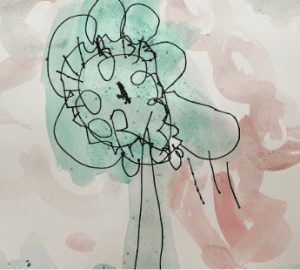
I saw the tree in summer has lots of leaves. I saw some clouds. The leaves change colour in autumn. Anupriya, 3.8
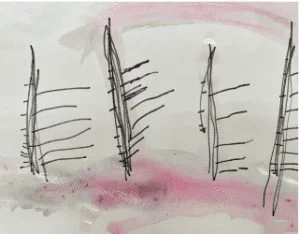
There are no leaves because the leaves are gone. It’s winter. In summer there are many leaves. In autumn the leaves change then they flew, flew far away and fall down. Annanya, 3.9
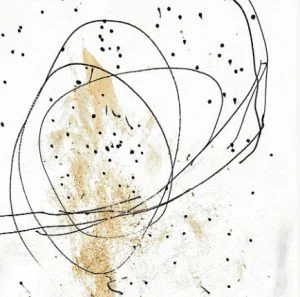
Lot of leaf falling. So many leaf falling down. Sai Pang, 3.4
As we ventured into the school garden, our curiosity flourished. We eagerly picked up items of interest and recorded our observations of the diverse plants, trees, fruits, flowers and leaves. Capturing our observations with observational drawings, we shared our findings with others.
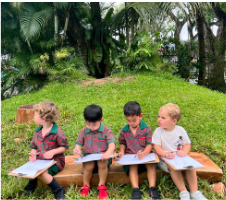
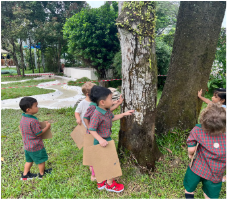
I look at flowers. I draw leaves and flowers here. Lily-Rose,3.6
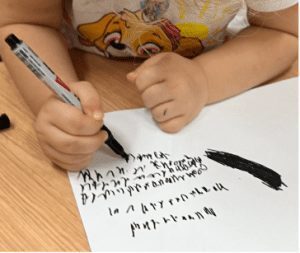
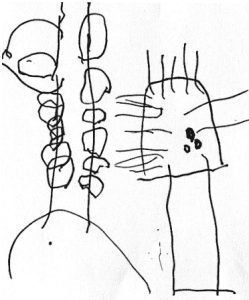
I see big tree and orange flower and I see mango tree. I draw so many mango. Mushen, 4.2
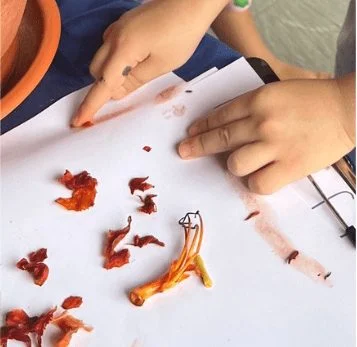
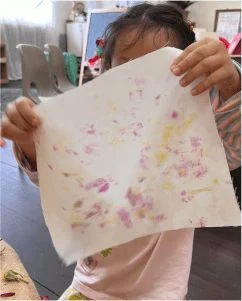
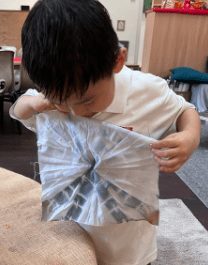
Some of us began experimenting with flowers. As we crushed the flowers onto paper, we observed the vibrant marks they left behind. Excited by these discoveries, we shared our observations with one another, sparking a deeper interest in our exploration.
I crush it. It’s working. I drawing. I make orange with flowers. I make green with leaves. Mushen, 4.2
I put flowers on the paper. I pressed it and it put colour on the paper. Annanya, 3.9
I used a bit of red and yellow. I crushed it and the flower come on the paper. Thea, 3.7
Look, little green. I crush the leaf. I can smell it! Nicholas, 3.5
Experimenting, Observing
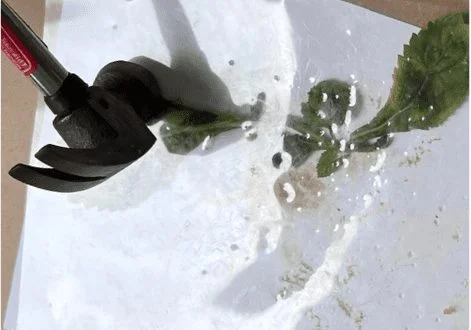
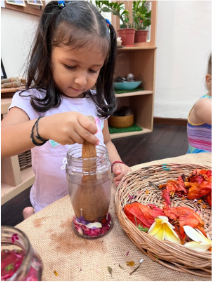
With the introduction of various tools and materials, such as rolling pins, mallets, mortar and pestles, mullers, hammers, clipboards, paper, and cloth our scientific discovery space became a vibrant hub for investigating nature prints.
Enthusiastically participating in this multi-sensory experience, we carefully analyzed our findings, observing the unique characteristics of each print. We evaluated and tested our ideas, identifying which flowers and leaves produced the most effective prints on paper and cloth as we crushed them using different tools.
The big mallet works. The green is because I crush the leaves. I use a paper to press it down and I used some of these tools and I didn’t take it up so high. I only hit up and down, up and down. Thea, 3.7
Causation
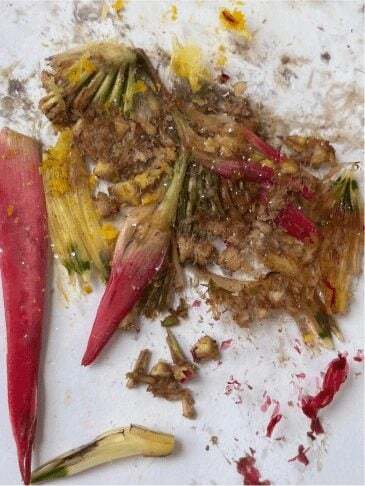
In response to prompts, we generated new ideas and experimented with a variety of techniques, noticing the differences in the prints and marks left behind. As we demonstrated our growing understanding of shapes and patterns, we created and extended simple patterns using the flowers, deepening our exploration of nature’s artistry.
Because I crush it with hammer. I hit it so hard and I so strong. I press it so hard. I use that one (wooden muller). Lily-Rose, 3.6
I use that (metal hammer). It crush the flower, the colour come out. Sai Pang, 3.4
I hammer. Crush leaf, no colour because already dry. Hammer is good. I get more colour. Mushen, 4.2
Hypothesis
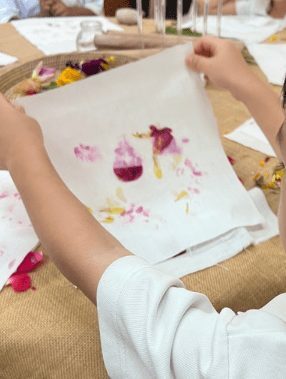
As we engaged our senses and honed our observational skills, we discovered that bright flowers produced stronger, more visible prints on the cloth. We also noticed that the fragrance of the flowers became more pronounced when we crushed them. However, as we continued to use the same flowers throughout the week, we found it increasingly difficult to create prints as effectively as we had before.
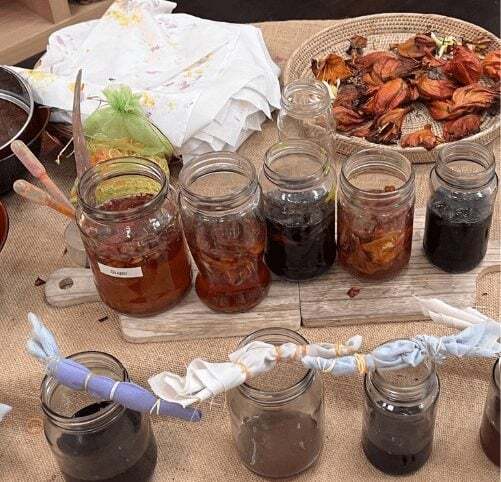
Reflecting on our experiences as thoughtful learners, we employed our critical thinking skills to draw simple conclusions based on our observations. Despite facing challenges, we demonstrated resilience and persevered to brainstorm ideas for extracting pigments from the flowers that were beginning to dry out.
Need to crush it. Because the flower have no colour. Youzhen, 3.9
We can put a little water on it, and after some time the colour will come out. Anupriya, 3.8
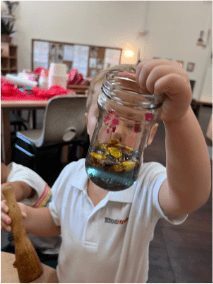
I think we should crush the flowers and put them in the bottle with water. Thea, 3.7
Sharing findings
Demonstrating agency in our learning, we drew meaningful conclusions from our investigations. Taking initiative, we recorded our observations and findings through various mediums, including photos, videos, specimens, and mark-making.
To enhance our data collection, we utilised instruments, such as microscopes and iPads to capture images and videos. Additionally, we created observational drawings of the plants, trees, and flowers we used in our experiments. This diverse approach not only enriched our understanding but also fostered a deeper connection to our explorations in nature.
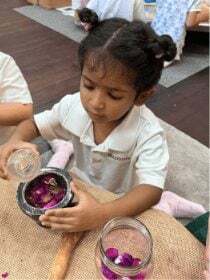
It is blue now. So much blue. Nicholas, 3.5
The water in my bottle is blue because I put the blue flowers. Jaidee, 3.5
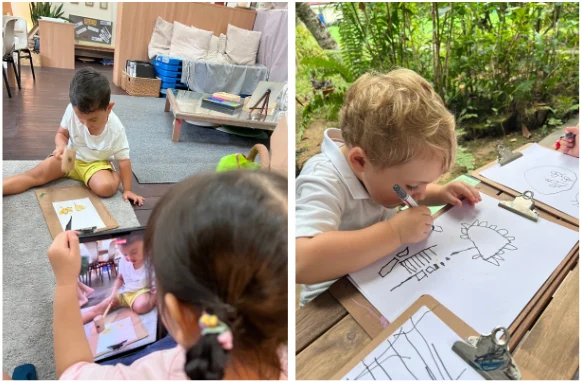
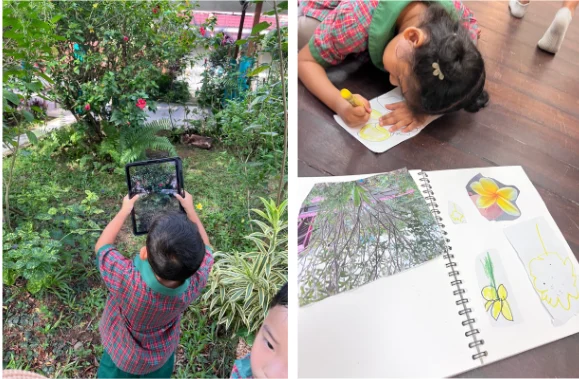
We delved into the use of maps as a means of locating the plants and trees involved in our experiments. To enrich our documentation process, we consulted books, deepening our inquiry into the concept of mapping. With our strengthened understanding of key concepts of form and perspective, we produced several drafts of our maps. Engaging in a cycle of review, we provided and received constructive feedback, which allowed us to refine our maps over time.
Collaborating closely, we brought together our observational drawings, specimens, maps, photos, and videos to create a comprehensive catalogue of our explorations and findings, highlighting the richness of our collective inquiry.
As we delved into the central idea, ‘Scientific investigations help us learn about the world’, we made meaningful connections to the line of inquiry, ’Reasons for exploration’. Through collaborative discussions, we shared what ‘exploration’ and ‘experimentation’ mean within the realm of science.
These reflections emerged from our recent experience in the sandpit, where we engaged in an experiment using hollow planks.
Our conversations highlighted our strong communication skills, as we effectively shared our thoughts and ideas, utilising relevant vocabulary to articulate our understanding. This exchange of information not only deepened our learning but also fostered a collaborative spirit among us.
- Doing experiments is like art but it is not. We use different materials to make things.
- Try and see what happens.
- It is like when we build a building with bricks and test it.
- Learn what new things do and you can go make it by yourself.
- When we try something new.
One of our peers shared a book centered around experiments using Lego toys. Inspired by its content, we gathered to discuss the potential for exploring a variety of experiments, using the book as our guide. This sparked our curiosity and encouraged collaborative thinking as we envisioned our projects.
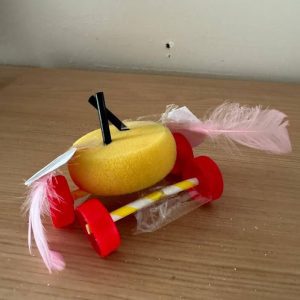
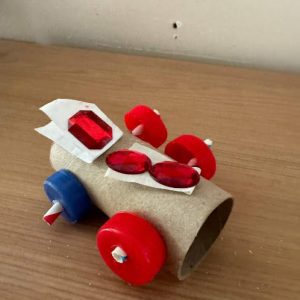
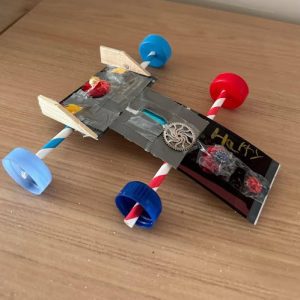
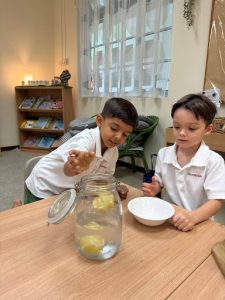
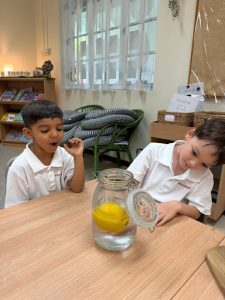
就是很像我们尝试不同的东西。像是⽤⽓球让⼀个⻋往前⾛ (We try new things, it is like we use to make balloon to make a car move) Yukun, 5.5
Our investigations made us curious about constructing a balloon-powered car. Collaborating with our group, we explored various recyclables, experimenting together to bring our ideas to life. This hands-on approach fostered creativity and teamwork as we designed and built our own balloon- powered cars.
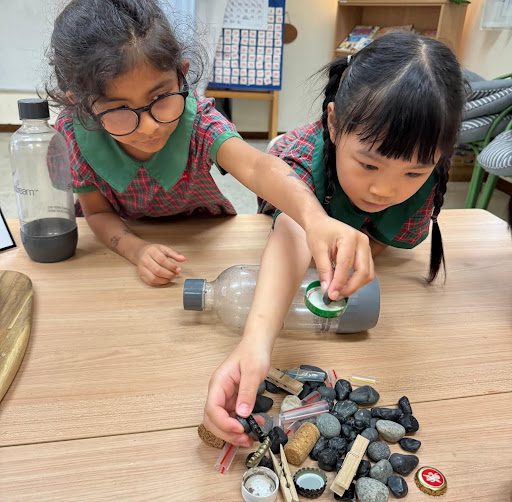
The Process of Inquiry
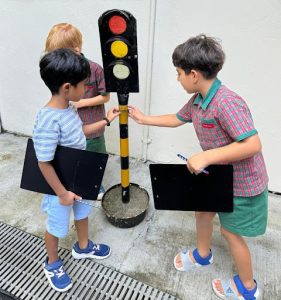
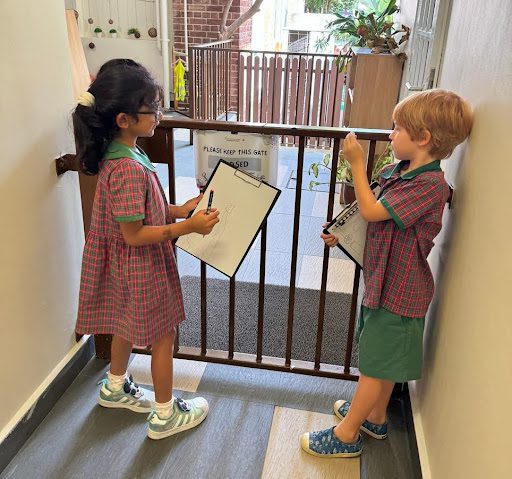
While constructing the balloon-powered car, we stumbled upon the use of magnetic force to power cars and this lead us into investigating metallic versus non-metallic objects. Focusing on the key concept of perspective, we documented our findings with a clipboard and paper as we moved around the school, experimenting and testing varied surfaces and objects.
During the inquiry process, we encountered items that initially seemed metallic and magnetic but turned out to be non-magnetic. A notable example was the door handle of our classroom, which highlighted the importance of careful observation in distinguishing between true magnetic properties and surface appearances.
Maybe it is made of plastic that looks like metal. Keyan, 5.4
Yeah it is not! See Janelle, it does not stick! The magnet does not stick. Lana, 5.7
“How about this one?” Atharv, 6.3
No, they don’t stick! Keyan, 5.4
Which means it is not magnetic! Reeya, 6.0
Discovering magnetic properties
Subsequently, we delved deeper into the exploration of the world of magnets. While engaging with the magnets on the provocation table, we made the intriguing discovery that a magnet positioned beneath the table could move another magnet placed on top. This realisation led us to understand that the magnetic force can pass through certain objects and materials.
Curious about this phenomenon, we used various materials found in the classroom to conduct an experiment. Together, we researched which objects allowed the magnetic force to pass through, fostering our collaborative spirit and deepening our understanding of magnetism.
Oh my gosh, it can pass through this big board! Reeya,6
It can pass through my book and the magnet doesn’t fall! I wonder how many pages I can use until it stops getting magnetic. I think I should try ten more pages! Madison, 5.11
Our Actions
As we deepened our understanding of the characteristics of magnets, we engaged in a rich discussion about whether magnets retain their magnetic properties when submerged in water. Our curiosity led us to wonder if the magnetic force could persist and pass through water.
Inspired by our inquiries, we decided to test this notion through a hands-on experiment. This process allowed us to demonstrate our ability to collaborate, articulate our ideas, and set meaningful goals for our group interactions.
We can watch the video and the video will tell us how we can make our own magnet! Keyan, 5.4
How did it even do that? The nail is not attracted to the (stapler) bullets but after we rub the magnet on it, it just sticks to the bullets for a short while! We can’t do that for the other nail because it is too old and rusty. Madison, 5.11
As we reflected on our learning, we posed an intriguing question: “Can we make our own magnets?” We eagerly explored online resources and watched videos about the possibilities of magnet creation.
In our research, we discovered the stroke method, where a permanent magnet is used to stroke a metal object—like a metal bar or nail—to transfer magnetic force. Inspired by this newfound knowledge, we gathered the necessary materials and set out to conduct this experiment together, embodying the collaborative spirit of our learning community.
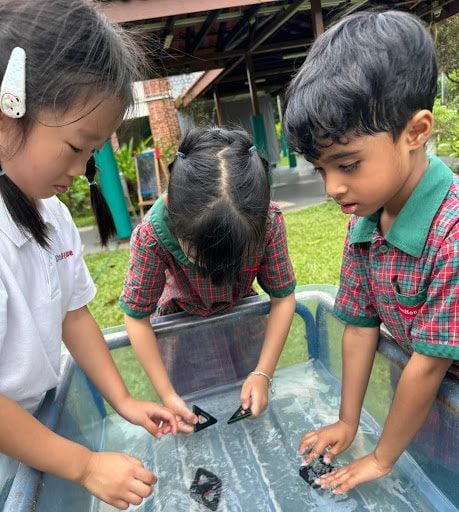
A Day in Early Years
A day in Nursery or Kindergarten at EtonHouse Bangkok balances familiar routines with opportunities for play, inquiry and discovery.
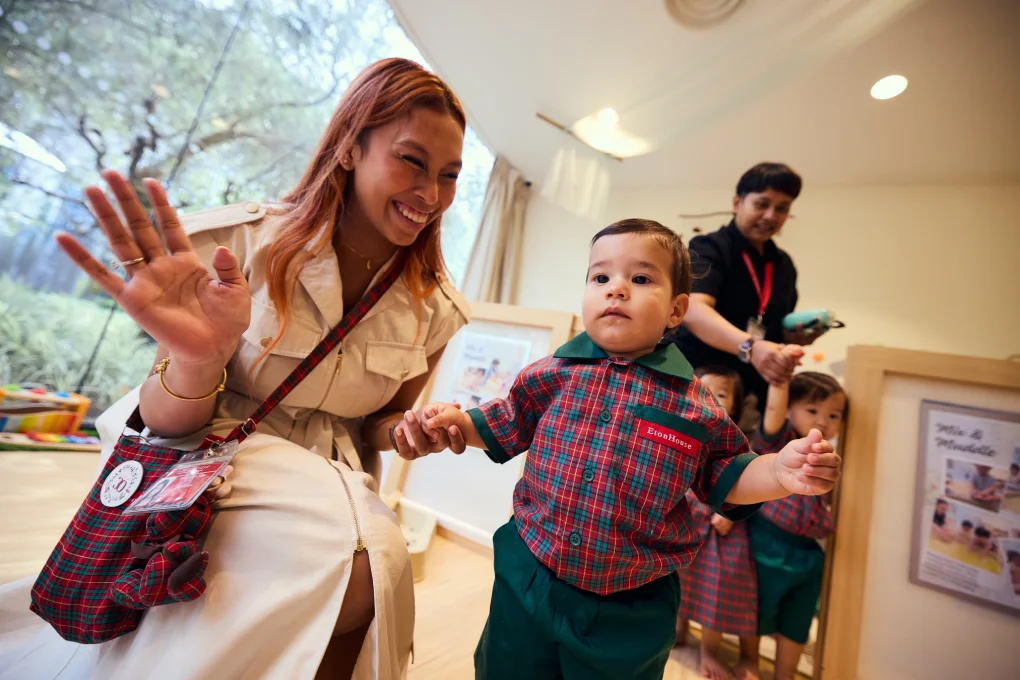
A warm welcome
Children begin the day with a personal welcome from educators who know them well. Conversations and open-ended invitations help each child settle in and prepare for the day.
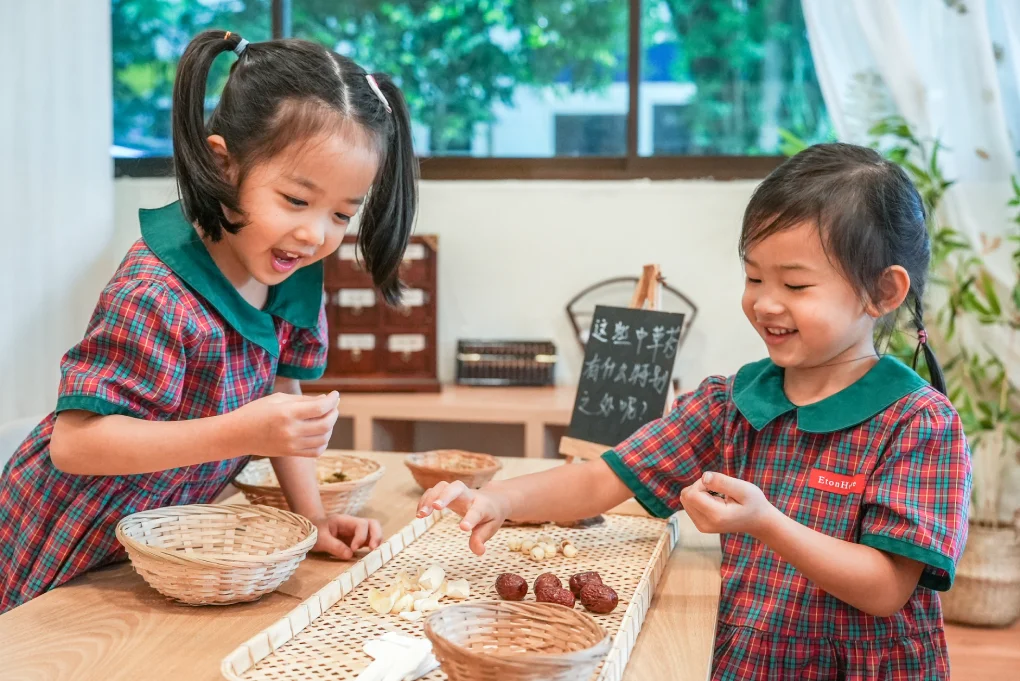
Morning provocations
Children encounter carefully prepared materials, questions and experiences based on their interests. Educators observe, listen and extend their thinking through conversation and collaboration.
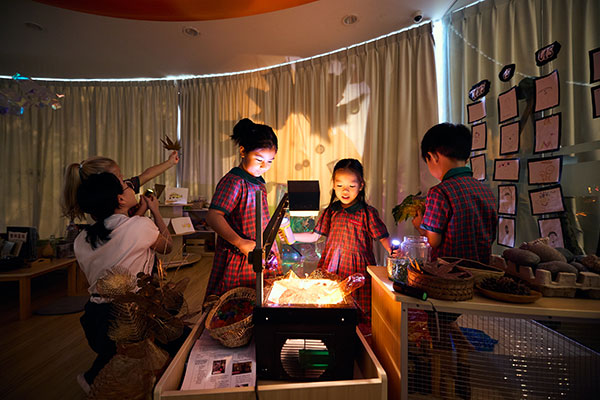
Learning studios
Ateliers and specialist studios give children space to explore materials, construct ideas and communicate through the Hundred Languages of childhood.
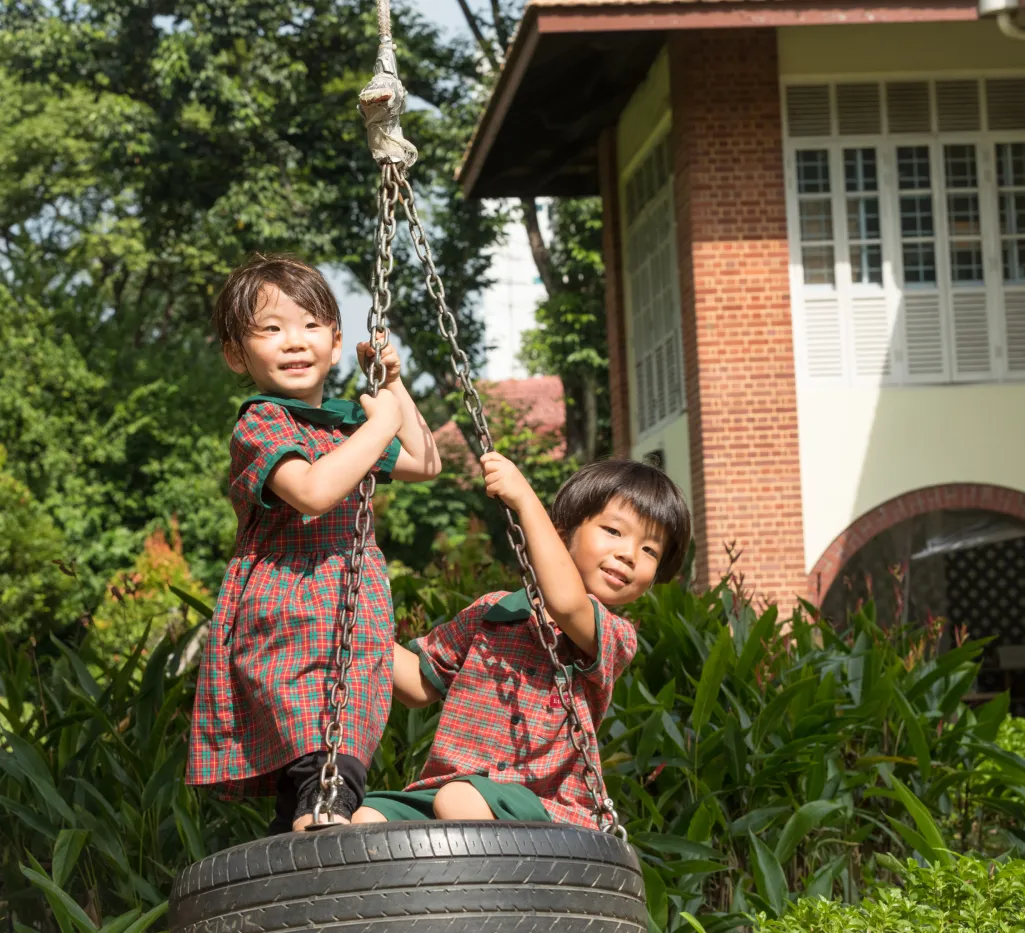
Outdoor discovery
Movement and outdoor exploration strengthen physical development while encouraging curiosity about nature and the surrounding environment.
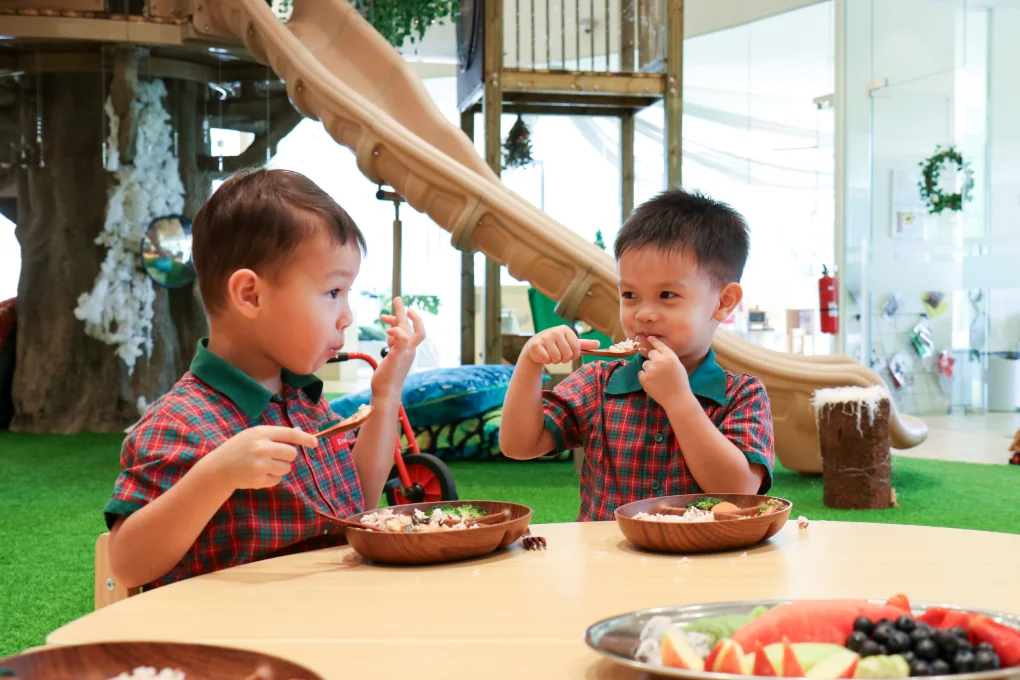
Food, culture and connection
Snack and mealtimes invite children to slow down, connect with others and experience food through their senses. These daily moments help children develop independence, social confidence and healthy habits while discovering how food brings people and cultures together.
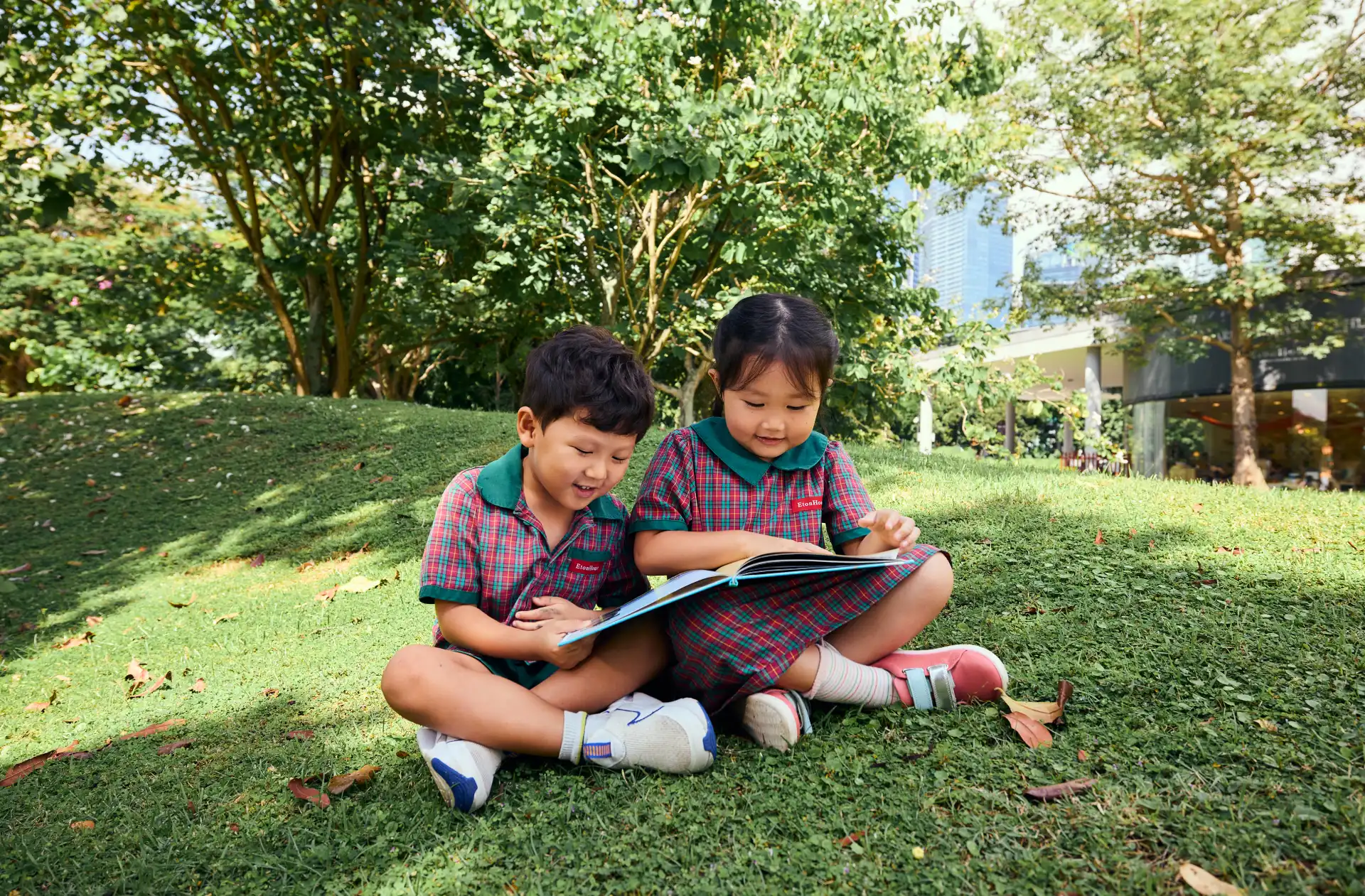
Stories, reflection and connection
Children revisit their discoveries through stories, drawings, photographs and group discussions. Reflection helps them recognise how their ideas and abilities are growing.
Inspiration
Why Families Choose Our Early Years
Small classes, close relationships and a community that grows alongside your child.
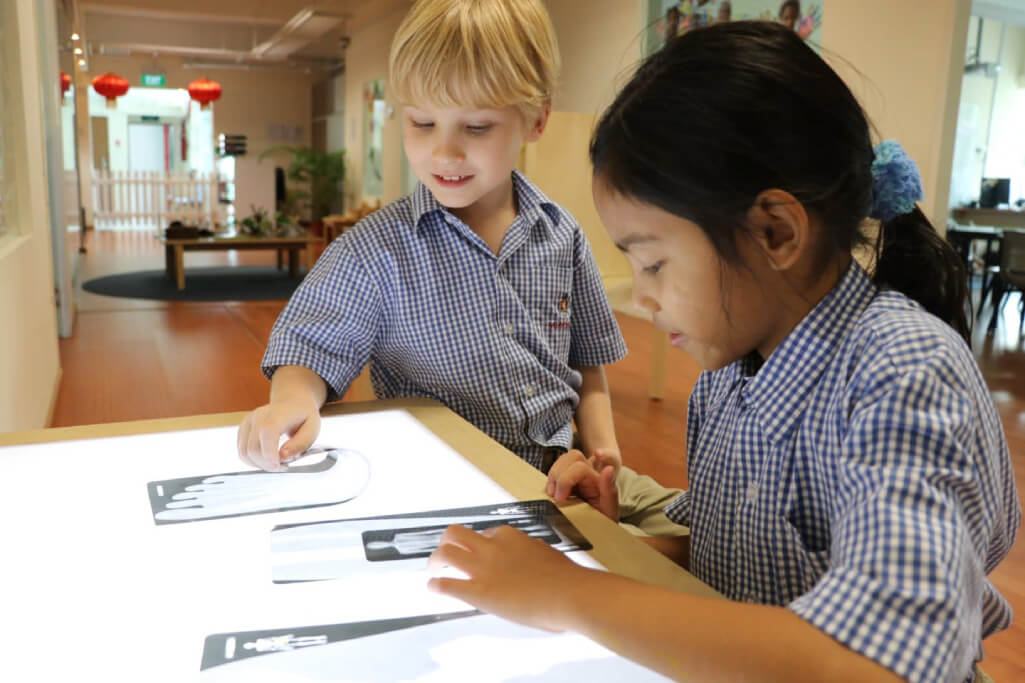
Confident Communicators
Children are given many ways to express an idea — through words, art, movement and play.
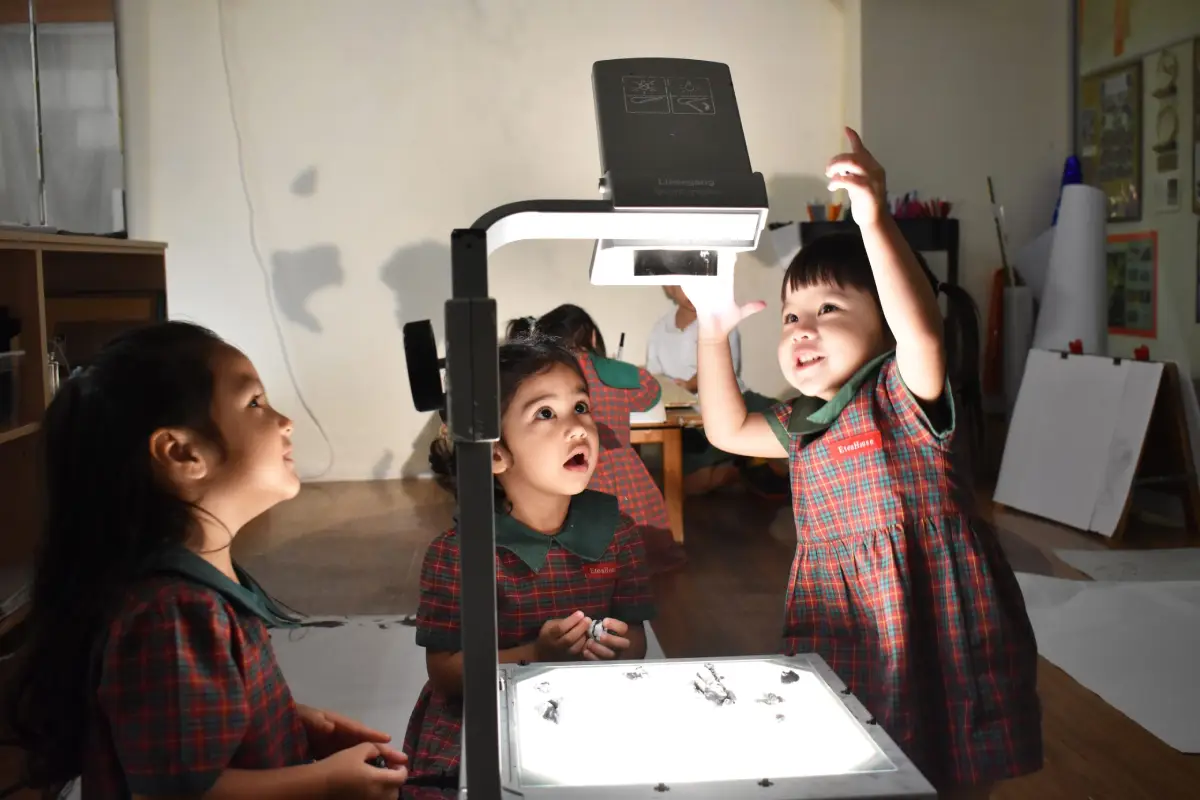
Curious Problem-Solvers
Guided inquiry builds the habit of asking good questions long before a child can read.
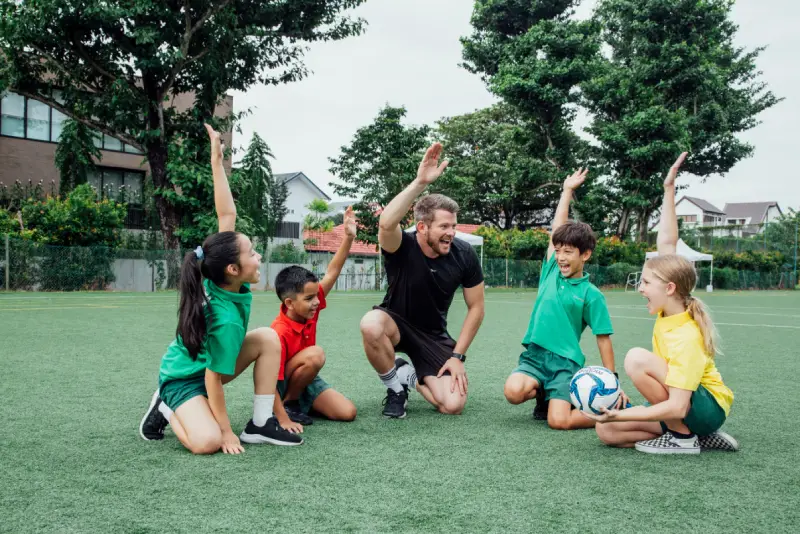
A Close-Knit Community
With every teacher knowing every child, families stay closely connected to daily learning.
FAQ
Frequently Asked Questions
Common questions from families exploring EtonHouse Bangkok's Early Years and preschool programme.
What ages does EtonHouse Bangkok accept for Nursery and Kindergarten?
Our Early Years programme welcomes children aged 2 to 6 years:
- Nursery 1: 2 to 3 years
- Nursery 2: 3 to 4 years
- Kindergarten 1: 4 to 5 years
Our Admissions Team will advise families on the appropriate level based on the child’s age and developmental needs.
What curriculum does EtonHouse Bangkok follow in the Early Years?
EtonHouse Bangkok follows the proprietary Inquire. Think. Learn. curriculum framework for children from Nursery 1 to Kindergarten 2.
Inspired by the Reggio Emilia approach, the curriculum develops children through purposeful play, inquiry, relationships and thoughtfully designed learning environments. It builds strong foundations across communication, social development, thinking, physical development, creative expression and agency.
Is EtonHouse Bangkok a Reggio Emilia school?
EtonHouse International School Bangkok is Bangkok’s only school that officially represents the Reggio Emilia approach. Our Early Years programme offers a Reggio Emilia-inspired education that respects children as capable learners and active participants in shaping their learning.
Educators observe children’s interests, introduce meaningful questions and materials, and guide investigations that develop over time. Using their Hundred Languages, including art, movement, construction and storytelling, children explore and communicate their ideas.
The learning environment also plays an important role. Purpose-built studios, ateliers and carefully selected materials invite children to investigate, collaborate and deepen their thinking.
What is the difference between Nursery and Kindergarten?
Nursery supports children aged 2 to 4 as they develop confidence, language, independence and positive relationships through play and exploration.
Kindergarten serves children aged 4 to 6. It extends their inquiry skills and builds stronger foundations in literacy, numeracy, communication and self-regulation in preparation for primary years.
Both programmes follow the same Reggio Emilia-inspired philosophy and Inquire. Think. Learn. curriculum framework, adapted to each stage of development.
How does the Kindergarten programme prepare children for primary school?
Children develop early literacy and numeracy alongside communication, independence, self-regulation and collaboration. They learn to ask questions, solve problems and approach unfamiliar situations with confidence.
Educators monitor each child’s development and provide the appropriate balance of support and challenge, creating a smooth transition from Kindergarten 2 into Year 1.
How does EtonHouse Bangkok support language development?
Children develop English through meaningful daily interactions, stories, play and inquiry. Educators integrate listening, speaking, reading and writing into the learning experiences rather than teaching as an isolated subject.
Our multilingual international school community also values children’s native languages and cultural identities. Families can speak with the Admissions Team about the language programmes available for your child’s year group.
How is EtonHouse Bangkok different from other international schools in Bangkok?
EtonHouse International School Bangkok combines the personal attention of a premium boutique school with the reach of an international education group spanning seven countries.
It is also Bangkok’s only school that officially represents the Reggio Emilia approach. Our Reggio Emilia-inspired curriculum, small classes and purpose-built studios support creativity, agency and personalised learning. Shared projects across the EtonHouse network give children an international outlook from the beginning of their education.
What are the benefits of a close-knit Early Years school?
A close-knit school community allows educators to develop a close understanding of every child. This helps teachers respond to individual interests, recognise when additional support or challenge is needed and build strong relationships with families. Children also benefit from a close-knit environment in which they feel known, secure and confident enough to explore.
How will I know what my child is learning?
Educators make learning visible through observations, photographs, children’s work and learning stories. Families receive regular insights into their child’s interests, thinking and development, supported by ongoing communication with teachers.
Can families visit the school before applying?
Yes. We encourage families searching for a Nursery, Kindergarten or international school in Bangkok to meet our team, explore the learning spaces and learn how the programme could support their child.